Gabi Goslar Biography: A Story of Survival, Family, and Quiet Resilience
Introduction
Gabi Goslar is best known as a Holocaust survivor and the younger sister of Hannah Pick-Goslar, one of Anne Frank’s closest childhood friends. Born in 1940 in Amsterdam during one of the darkest periods of modern history, Gabi’s life began amid rising persecution of Jewish families in Nazi-occupied Europe. While her sister Hannah became widely recognized for her memoirs and testimony about Anne Frank, Gabi Goslar has remained a more private figure whose life is closely tied to survival, displacement, and the long aftermath of World War II.
Her story is not one of fame or public career achievements, but rather one of endurance, family bonds, and historical witness. Through her existence, she represents countless Jewish children whose lives were shaped by war and whose survival stories remain partially hidden in the shadows of history.
Quick Bio
| Field | Details |
| Full Name | Gabi Goslar |
| Date of Birth | 1940 |
| Age | 85 years (as of 2025–2026 estimate) |
| Birthplace | Amsterdam, Netherlands |
| Nationality | Dutch (Jewish heritage) |
| Profession | Private individual / Holocaust survivor |
| Height | Not publicly available |
| Weight | Not publicly available |
| Parents | Father: Hans Goslar, Mother: Ruth Judith Klee |
| Siblings | Hannah Pick-Goslar (elder sister) |
| Relationship Status | Not publicly disclosed |
| Children | Not publicly disclosed |
| Net Worth | Not publicly known |
Early Life and Background
Gabi Goslar was born in 1940 in Amsterdam, Netherlands, into a Jewish family that would soon face the brutal realities of Nazi occupation. Her parents, Hans Goslar and Ruth Judith Klee, were part of a well-educated and culturally rooted Jewish community.
Her father, Hans Goslar, worked in public service and was known for his involvement in economic and civic affairs. Her mother, Ruth Judith Klee, came from a respected Jewish family with intellectual and cultural ties across Europe. Gabi’s maternal lineage included her great-grandfather, Moshe Klee, and other extended family members such as Esther Klee, reflecting a broader family network that valued education, culture, and community.
Gabi’s elder sister, Hannah Pick-Goslar, born in 1928, would later become one of the most well-documented childhood friends of Anne Frank. The sisters shared a household that, before the war, was stable, loving, and deeply connected to Amsterdam’s Jewish community.
However, Gabi’s early childhood unfolded under the growing shadow of World War II. By the time she was a toddler, Nazi forces had occupied the Netherlands, and Jewish families were subjected to increasing restrictions, forced registration, and eventual deportation.
Life During the Holocaust
The Holocaust period marked the most tragic and defining chapter in Gabi Goslar’s early life. Like many Jewish children in Nazi-occupied Europe, her life was disrupted almost immediately by persecution.
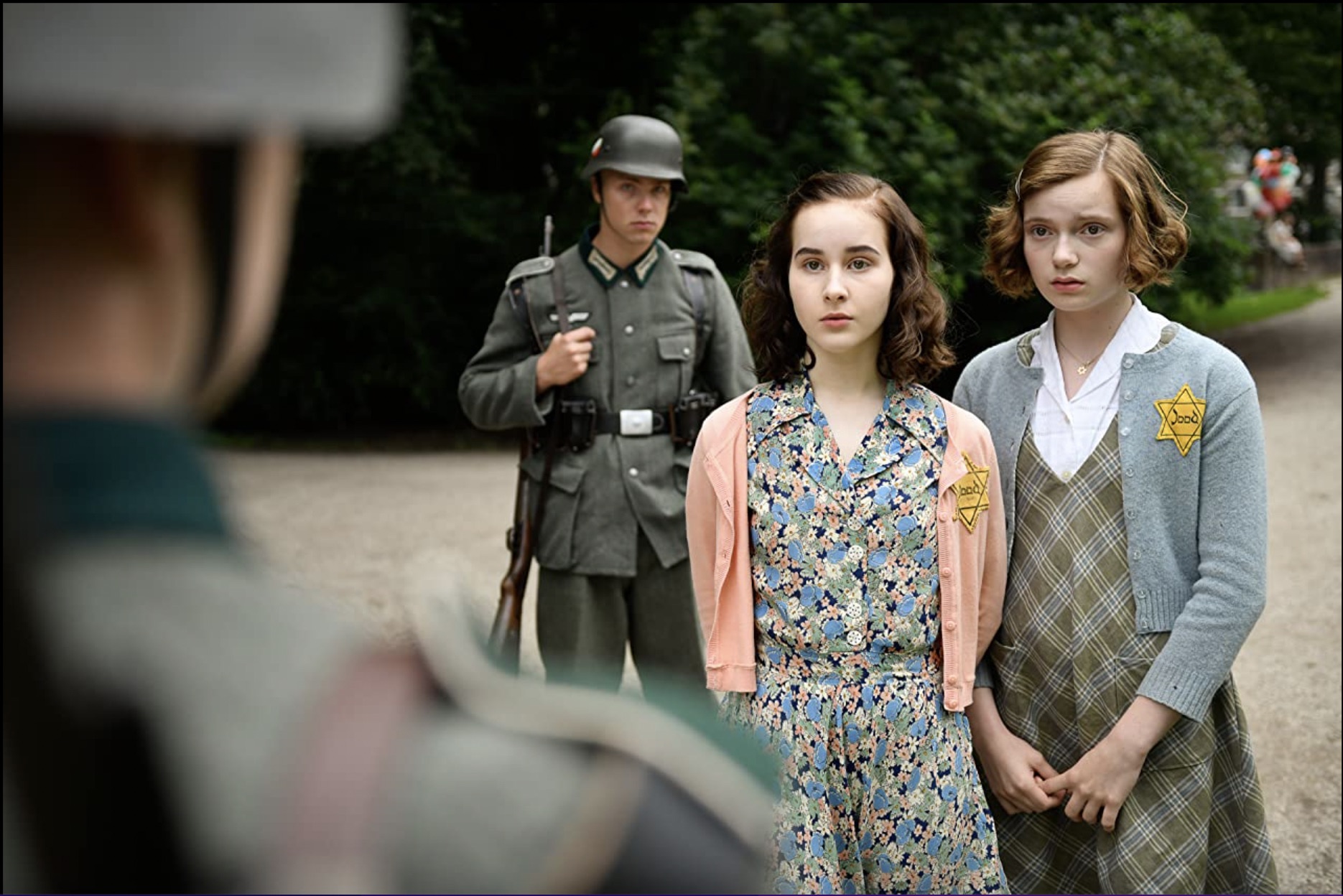
The Goslar family, like many others, faced escalating restrictions including exclusion from public spaces, schools, and employment. Eventually, Jewish families were forced into hiding or deportation to concentration and transit camps.
Gabi’s sister, Hannah, was eventually deported to the Bergen-Belsen concentration camp. This camp would later become one of the most infamous sites of suffering during the Holocaust. Hannah survived against all odds and later became a powerful voice for Holocaust remembrance.
Gabi’s own experience during this time is less documented in public records, largely because she has lived a private life and was very young during the war. However, historical context suggests that she, like many Jewish children of her age, was either hidden, displaced, or separated from parts of her family during deportations and wartime chaos.
What is known is that the Goslar family suffered immense loss and fragmentation. Her parents, Hans Goslar and Ruth Judith Klee, were both victims of Nazi persecution. Her mother is believed to have died during or shortly after deportation, while her father also perished in a concentration camp.For Gabi, survival itself became the central reality of her childhood.
Post-War Life and Reconstruction
After the end of World War II in 1945, Europe was left devastated, and surviving Jewish families faced the enormous challenge of rebuilding their lives from nothing. Gabi Goslar, as a Holocaust survivor and orphaned child, grew up in a world permanently shaped by loss.
She was reunited with surviving relatives, including her sister Hannah, who would go on to rebuild her life in Israel and later become a prominent educator and speaker on Holocaust memory.
Gabi’s post-war life, in contrast, remained largely outside of public attention. Unlike her sister, she did not pursue public speaking or historical documentation. Instead, she chose a quieter path, focusing on personal life and family away from media exposure.
This privacy is not unusual among Holocaust survivors. Many chose silence as a way to cope with trauma, while others, like Hannah, took on the responsibility of testimony. Gabi’s silence should not be interpreted as absence, but rather as a different form of survival.
Education
There is limited publicly available information about Gabi Goslar’s formal education. Given the disruption of war and displacement during her early years, her schooling was almost certainly interrupted during childhood.
After the war, she would have grown up in a Europe undergoing reconstruction, where educational opportunities were gradually restored. Like many survivor children, she likely resumed education in a post-war system that was still recovering from widespread destruction.
While no detailed academic records are publicly documented, it is reasonable to understand that her education was shaped more by survival circumstances than traditional academic continuity.
Career Journey
Unlike many individuals with public biographies, Gabi Goslar does not have a documented professional career in the public sphere. She is not known for holding public office, academic positions, or entertainment industry roles.Instead, her life is best understood through the lens of private resilience rather than professional recognition.
Her story reflects a broader pattern among Holocaust survivors who rebuilt ordinary lives after extraordinary trauma. Many survivors chose professions in teaching, business, caregiving, or household roles, often without seeking public recognition.
Gabi’s life represents this quieter category of survivors—those whose contributions are not measured by fame but by endurance, family continuity, and the preservation of memory through personal testimony rather than public platforms.
Personal Life and Family
Family has always been central to the Goslar story. Gabi’s closest known relative is her sister, Hannah Pick-Goslar, whose friendship with Anne Frank became historically significant.
Hannah’s memoirs and interviews often highlight the emotional and human side of their shared experiences during the Holocaust. While Gabi is not frequently mentioned in detail, her presence is part of that larger family narrative of survival.
Gabi is believed to have maintained a private personal life after the war. There is no widely available public record of marriage, children, or professional affiliations. This privacy suggests a deliberate choice to remain outside of public historical storytelling.
Her niece, Ruth Pinchas Pick, is part of the extended family lineage that continues the Goslar family legacy.
The Goslar family story is one of both deep tragedy and continuity—loss during the Holocaust, survival against overwhelming odds, and the continuation of family lines into the present generation.
Net Worth and Lifestyle
Gabi Goslar’s net worth is not publicly documented, and it is important to note that she is not a public business or entertainment figure.
Her life has not been defined by financial status or public wealth but by historical survival and personal resilience. As such, discussions of net worth are not applicable in a meaningful way.
Her lifestyle is best understood as private, modest, and shaped by post-war European life rather than public prominence.
The Legacy of the Goslar Family
Although Gabi Goslar herself remains a private figure, the Goslar family holds a significant place in Holocaust history.
Her sister, Hannah Pick-Goslar, became widely known for her testimony about Anne Frank and her experiences in Bergen-Belsen. Through Hannah’s accounts, the broader story of the family—including Gabi’s early life—is preserved in historical memory.
The Goslar family represents:
- The destruction of European Jewish families during WWII
- The survival of children separated by war
- The emotional legacy carried across generations
- The importance of memory and testimony
Gabi’s existence is part of this broader narrative, even if she has not chosen a public role in historical documentation.
Interesting Facts
- Gabi Goslar was born during World War II in Nazi-occupied Netherlands.
- She is the younger sister of Hannah Pick-Goslar, a close friend of Anne Frank.
- Her family suffered significant losses during the Holocaust, including her parents.
- Unlike her sister, she has lived a very private life away from public attention.
- She represents the lesser-documented survivors of Holocaust child history.
- Her life highlights the difference between public testimony and private survival.
Historical Significance
Gabi Goslar’s importance lies not in public achievements but in what her life represents historically.
She is part of a generation of Jewish children whose early lives were shaped by persecution and displacement. While some survivors became public voices, others chose silence or privacy. Both forms of survival are equally meaningful in understanding the Holocaust’s long-term human impact.
Her story contributes to a broader understanding of:
- Childhood during genocide
- Family separation under Nazi rule
- Post-war reconstruction of identity
- The diversity of survivor experiences
In this sense, Gabi Goslar is a quiet but important figure in Holocaust memory.
Conclusion
Gabi Goslar’s life is a powerful reminder that history is not only shaped by public figures or well-documented stories, but also by quiet survivors whose lives continue away from the spotlight.
Born into a Jewish family in wartime Amsterdam, she endured one of the most catastrophic periods in human history. While her sister Hannah became a well-known witness to the Holocaust, Gabi chose—or was led by circumstance—into a life of privacy.
Her story is not defined by fame or public recognition, but by survival, family connection, and the enduring legacy of a generation that lived through unimaginable hardship.Through her existence, Gabi Goslar remains a silent yet important thread in the larger tapestry of Holocaust history.
People Also Ask
1. Who is Gabi Goslar?
Gabi Goslar is a Holocaust survivor born in 1940 in Amsterdam, best known as the younger sister of Hannah Pick-Goslar, a childhood friend of Anne Frank.
2. Is Gabi Goslar related to Anne Frank?
She is not directly related to Anne Frank, but her sister Hannah was one of Anne Frank’s closest friends.
3. What happened to Gabi Goslar during World War II?
As a young child during the Holocaust, Gabi’s life was deeply affected by Nazi persecution, family separation, and wartime displacement. Specific details of her wartime experience are limited due to her private life.
4. Did Gabi Goslar survive the Holocaust?
Yes, Gabi Goslar survived the Holocaust and lived through the post-war period, though she has maintained a very private life.
5. What is Gabi Goslar known for today?
She is known primarily for her connection to Holocaust history and her family’s survival story, especially through her sister Hannah’s well-documented testimony.
6. Why is Gabi Goslar not widely documented?
Unlike her sister, Gabi chose a private life and did not participate in public historical narration or memoir writing.