Charles Simonyi Biography :Age, Career, Family, Net Worth and Life Story
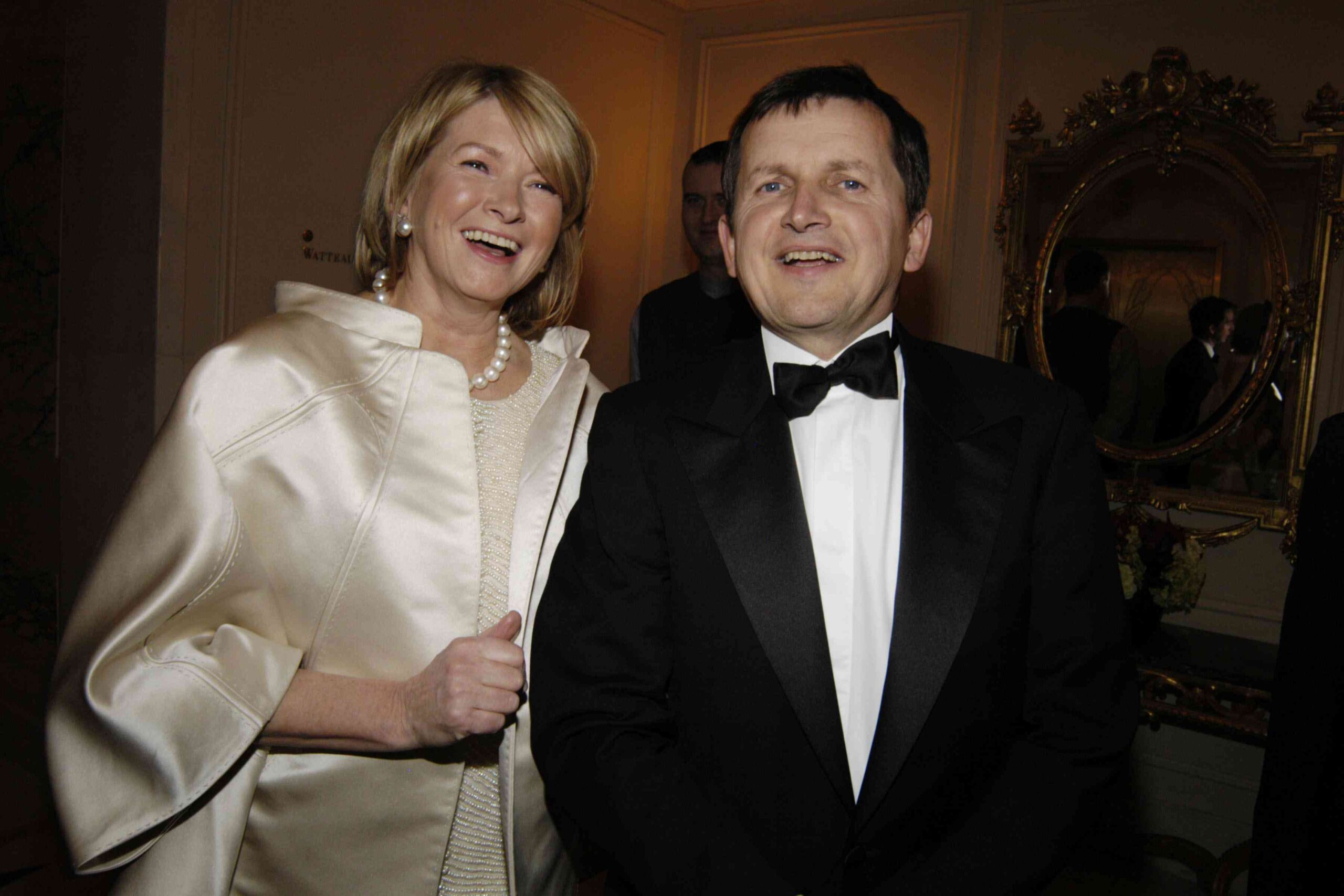
Quick Bio
| Full Name | Charles Simonyi |
| Date of Birth | September 10, 1948 |
| Age | 77 years (as of 2025) |
| Birthplace | Budapest, Hungary |
| Nationality | Hungarian-American |
| Profession | Software Executive, Engineer, Space Tourist |
| Famous For | Microsoft Word & Excel development |
| Education | Stanford University |
| Height | Approx. 5 feet 11 inches (180 cm) |
| Marital Status | Married |
| Wife | Lisa Persdotter |
| Children | 2 daughters |
| Net Worth | Estimated $5+ billion |
| Residence | United States |
Charles Simonyi is one of those rare individuals who didn’t just work in technology—he helped shape the way we use computers today. From co-developing some of the most widely used software in the world to becoming a private space traveler, his journey is a mix of innovation, ambition, and curiosity. Born in Hungary and later building his career in the United States, Simonyi’s story reflects both technical brilliance and bold life choices.
Early Life
Charles Simonyi was born on September 10, 1948, in Budapest, Hungary. Growing up in a country under communist rule, his early life was far from the opportunities he would later experience. His father was a professor of electrical engineering, which played a big role in shaping Charles’s interest in science and technology.
As a teenager, he worked as a night watchman at a computer lab. This wasn’t just any job—it gave him access to early computers at a time when most people had never even seen one. Instead of just doing his duties, he used that time to teach himself programming. That curiosity became the foundation of everything that followed.
In 1966, at the age of 17, Simonyi made a bold decision to leave Hungary. Moving to the West was not easy during that time, but he managed to make his way to Denmark and later to the United States. That move changed his life completely.
Education
After arriving in the United States, Charles Simonyi pursued higher education with full focus. He attended the University of California, Berkeley, where he studied engineering mathematics and statistics.
Later, he went on to earn a Ph.D. in computer science from Stanford University. During his time at Stanford, he worked at Xerox PARC (Palo Alto Research Center), one of the most innovative tech environments of its time. This is where he began working on early versions of what would eventually become modern computer interfaces.
His academic journey wasn’t just about degrees—it was about gaining exposure to groundbreaking ideas that would influence the future of computing.
Career Beginnings
Simonyi’s early career started at Xerox PARC, where he worked on the development of the Bravo word processor. This was one of the first programs to use a graphical user interface, something we now take for granted.
Working at Xerox PARC placed him at the center of innovation. Many of the ideas that shaped personal computing came out of that environment. However, despite the groundbreaking work, Xerox struggled to commercialize these innovations effectively.
That’s when Charles Simonyi decided to take the next big step in his career.
Microsoft Journey
In 1981, Charles Simonyi joined Microsoft, which was still a young and growing company at the time. He was recruited by Bill Gates himself, who recognized Simonyi’s talent and vision.
At Microsoft, Simonyi led the development of two of the most important software applications in history:
- Microsoft Word
- Microsoft Excel
These tools revolutionized how people work, communicate, and manage data. Before Word and Excel, similar tools existed but were not as user-friendly or powerful. Simonyi helped bring structure, usability, and efficiency into office software.
One of his most notable contributions was introducing the concept of “intentional programming,” which aimed to make coding more intuitive and less error-prone. He also played a key role in establishing coding standards, including what became known as “Hungarian notation,” a naming convention for variables in programming.
Simonyi stayed at Microsoft for over two decades, contributing massively to its growth and success.
Founding Intentional Software
After leaving Microsoft in 2002, Charles Simonyi co-founded Intentional Software. The goal of this company was to further develop the idea of intentional programming.
The vision was simple yet ambitious: make software development more efficient by allowing developers to work at a higher level of abstraction. Instead of focusing on low-level code, programmers could focus on their intentions, and the system would handle the rest.
Although the concept was complex and ahead of its time, it attracted attention in the tech world. Eventually, Microsoft acquired Intentional Software in 2017, bringing Simonyi back into collaboration with his former company.
Space Tourism Experience
One of the most fascinating chapters of Charles Simonyi’s life is his journey into space. Unlike astronauts who train for years under government programs, Simonyi became a space tourist—someone who pays for the opportunity to travel to space.
He made history by traveling to space twice:
- First trip in 2007
- Second trip in 2009
Both missions were carried out through the Russian space program, and he visited the International Space Station (ISS) during these trips.
This made him the first private individual to travel to space twice. His journeys were not just for adventure—he also conducted educational outreach, sharing his experiences with students and the public.
His passion for space exploration shows that curiosity doesn’t stop at career success—it can take you beyond Earth itself.
Personal Life
Charles Simonyi has had an interesting personal life alongside his professional achievements. He is married to Lisa Persdotter, a Swedish philanthropist. The couple has two daughters together.
Before his marriage, Simonyi was also known for his relationship with Martha Stewart, the famous American businesswoman and television personality. Their relationship attracted media attention at the time.
Despite his public recognition, Simonyi has generally maintained a relatively private lifestyle, focusing more on his work and interests rather than media appearances.
Net Worth
Charles Simonyi’s net worth is estimated to be over $5 billion. Most of his wealth comes from his long and successful career at Microsoft, where he was one of the early key figures.
In addition to his earnings from Microsoft, his investments, business ventures, and company acquisitions have also contributed significantly to his fortune.
His financial success reflects not just his technical expertise but also his ability to make strategic decisions throughout his career.
Philanthropy
Simonyi is also known for his contributions to education and the arts. He has donated millions of dollars to universities and institutions.
Some of his notable contributions include:
- Funding for computer science programs
- Support for scientific research
- Donations to arts and cultural institutions
At the University of Oxford, the “Simonyi Professorship for the Public Understanding of Science” was established through his funding. This position has been held by well-known scientists and communicators.
His philanthropic work shows his commitment to giving back and supporting future generations.
Achievements
Over the years, Charles Simonyi has achieved numerous milestones:
- Key developer of Microsoft Word and Excel
- Early pioneer of graphical user interfaces
- Introduced Hungarian notation in programming
- Co-founder of Intentional Software
- First private astronaut to visit space twice
- Major contributor to education and science funding
Each of these achievements highlights a different aspect of his personality—from technical innovation to adventurous spirit.
Legacy
Charles Simonyi’s legacy is deeply connected to how we interact with computers today. Every time someone writes a document or creates a spreadsheet, they are indirectly benefiting from his work.
His contributions go beyond just software. He helped shape the culture of programming, introduced new ways of thinking about code, and pushed the boundaries of what individuals can achieve.
Whether it’s in technology, education, or space exploration, Simonyi has left a lasting impact.
Interesting Facts
- He learned programming as a teenager while working night shifts
- He left Hungary during the Cold War era
- He worked at Xerox PARC before joining Microsoft
- He was personally recruited by Bill Gates
- He is one of the few people to travel to space more than once as a tourist
- He has a strong interest in arts and science communication
People Also Ask
Who is Charles Simonyi?
Charles Simonyi is a Hungarian-born American software engineer and businessman known for developing Microsoft Word and Excel. He is also famous for traveling to space twice as a private astronaut.
What is Charles Simonyi’s net worth?
His net worth is estimated to be over $5 billion, mainly earned through his career at Microsoft and other ventures.
How did Charles Simonyi become famous?
He became famous for his work at Microsoft, where he led the development of widely used software like Word and Excel.
Did Charles Simonyi go to space?
Yes, he traveled to space twice, in 2007 and 2009, becoming the first private individual to do so.
Where is Charles Simonyi from?
He was born in Budapest, Hungary, and later moved to the United States, where he built his career.
What did Charles Simonyi study?
He studied engineering mathematics and statistics at UC Berkeley and later earned a Ph.D. in computer science from Stanford University.
Is Charles Simonyi married?
Yes, he is married to Lisa Persdotter, and they have two daughters.
What is Charles Simonyi known for in programming?
He is known for developing Microsoft Word and Excel and introducing Hungarian notation, a coding naming convention.
Final Thoughts
Charles Simonyi’s life is a perfect example of how curiosity, courage, and innovation can lead to extraordinary achievements. From a young boy in Hungary experimenting with computers to a billionaire tech pioneer and space traveler, his journey is nothing short of inspiring.
He didn’t just follow opportunities—he created them. And in doing so, he changed the way millions of people work and interact with technology every single day.